The Tashkent Files(2019)
The Tashkent Files(2019)
Storyline
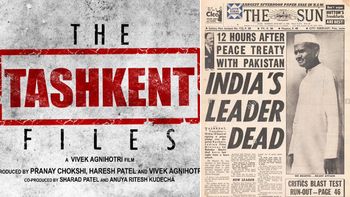
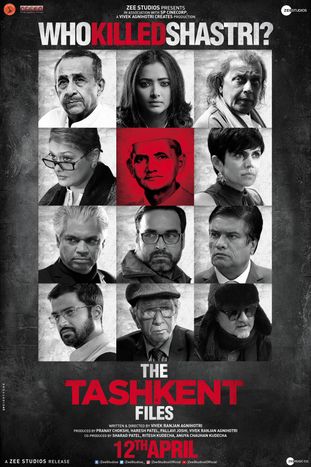
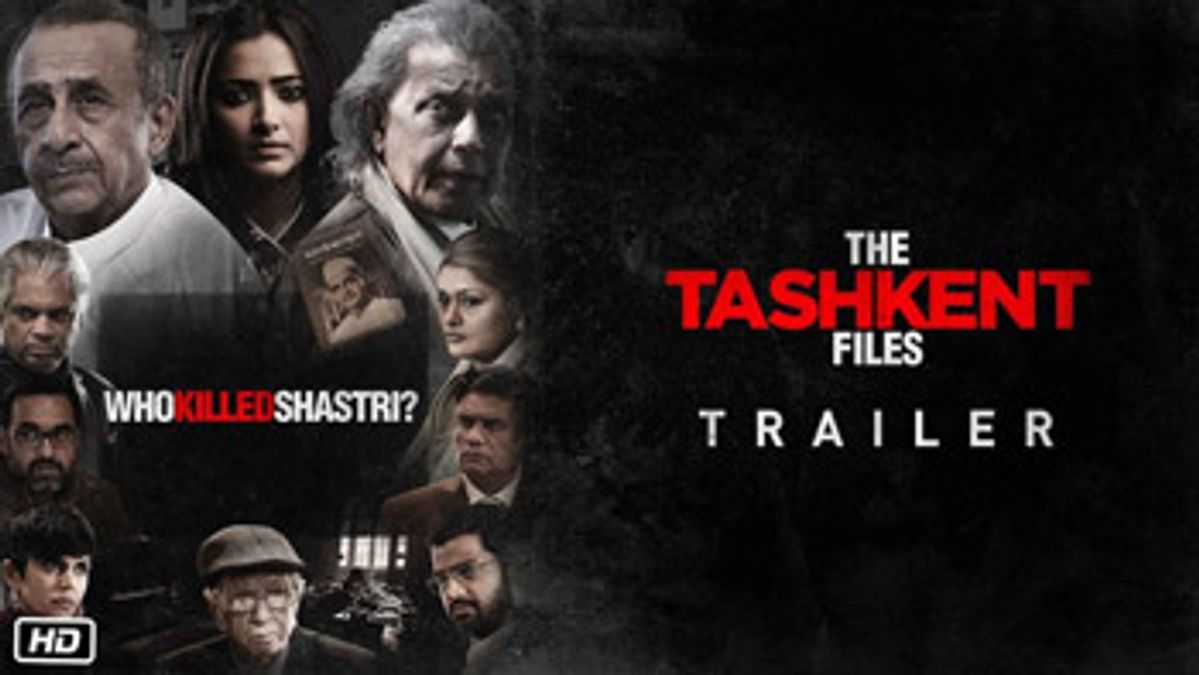
The Tashkent Files is a thriller that revolves around the mysterious death of India's 2nd Prime Minister Shri Lal Bahadur Shastri and attempts to uncover if he had actually died a natural death, or, as alleged, was assassinated.
The Tashkent Files Movie Details
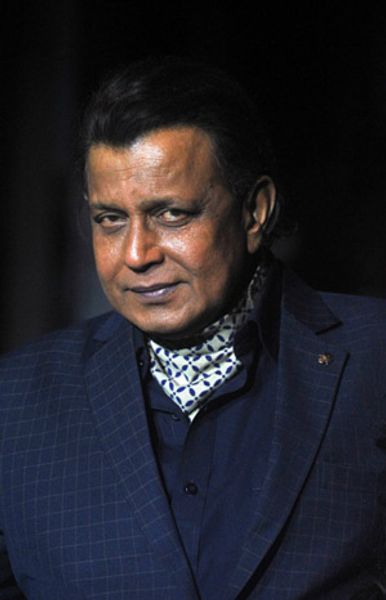
Mithun Chakraborty
Shyam Sundar Tripathi
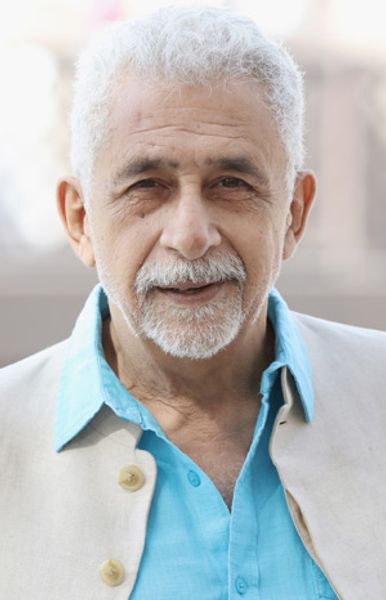
Naseeruddin Shah
PKR Natrajan

Shweta Basu Prasad
Raagini Phule
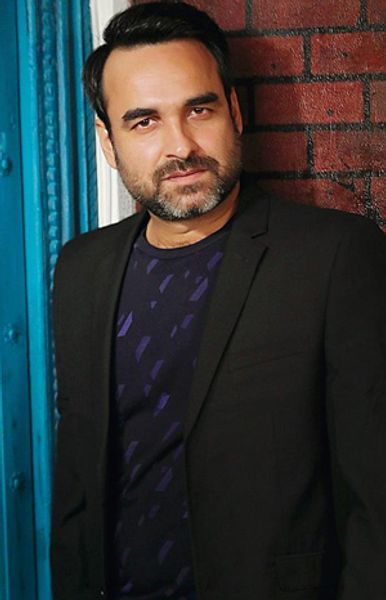
Pankaj Tripathi
Gangaram Jha

Pallavi Joshi
Aisha Ali Shah
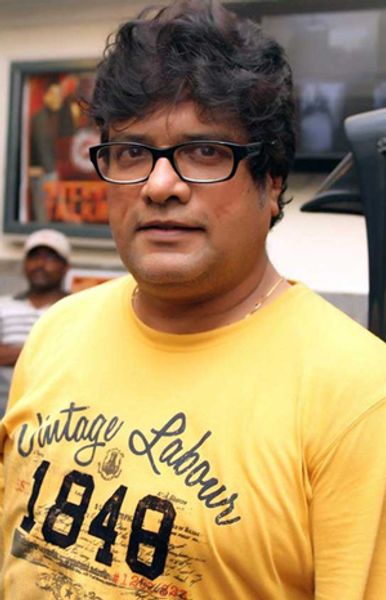
Rajesh Sharma
Omkar Kashyap

Prakash Belawadi
GKS Ananthasuresh

Mandira Bedi
Indira Joseph Roy
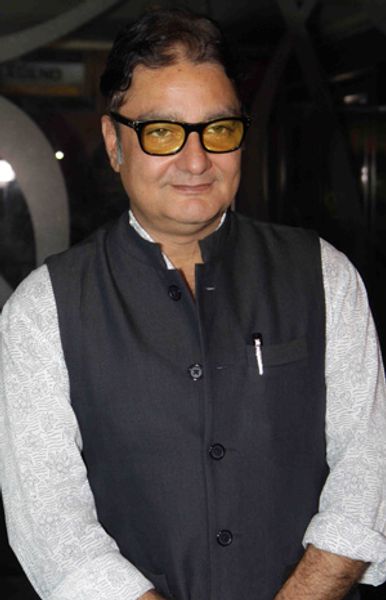
Vinay Pathak
Mukhtar
Vishwa Mohan Badola
Justice Kurian Abraham
Prashantt Guptha
Vishwendra Pratap Singh Rana

Ankur Rathee
You might also like
Recent and upcoming Bollywood releases




Videos & Trailer(2)
Stills(3)
Box Office CollectionSuper Hit
Opening Day
₹0.40 Cr
Opening Weekend
₹2.20 Cr
First Week
₹3.50 Cr
Lifetime (India)
₹16.75 Cr
External Reviews
THE TASHKENT FILES is the story of a group of people trying to understand whether there was any foul play in the sudden death of a significant Indian Prime Minister Lal Bahadur Shastri. Raagini Phule (Shweta Basu Prasad) is a rookie political journalist in Delhi working for a newspaper called 'India Times'. She has been given an ultimatum by her editor (Asif Basra) that she has to submit a scoop in a few days or else she'll be transferred to arts and culture, a beat that Raagini abhors.
A young "political" journalist desperate for a scoop to save her job attempts to probe the mysterious death of former Prime Minister Lal Bahadur Shastri. More than 50 years after his death, a film following this premise releases right at the onset of the Lok Sabha Elections, far from the scrutiny of the Election Commission.
The '70s era witnessed films like Aandhi, Kissa Kursi Ka and Nasbandi, which found inspiration in the country's then political scenario. They managed to get their point across without directly referencing any political party or political leader. Now, though, filmmakers are daringly attempting movies that have direct references to riots, the Partition, war, the armed forces and political conspiracies.
The director's Buddha In A Traffic Jam was a stated position on many of the elements that have troubled the current regime: pesky journalists refusing to peddle the official line, and many other worthies, which include left-over leftists, socialists, centrists, trying-to-keep-their-head-over-the-water-moderates, educationists. They all rear their inconvenient heads again in this political thriller based on real events.
Vivek Agnihotri's The Tashkent Files begins with a dedication to "all honest journalists of India", and thus begins, quite early on, the filmmaker's not-so-discreet jibes at all the institutions and ideologies, he believes, have wrecked the nation. Through his characters, he classifies them -NGOs are "social terrorists", Supreme Court judges are "judicial terrorists", writers and historians are "intellectual terrorists" and the media, of course, is "TRP terrorists".
12 angry men -- correction, 6 men and 3 women but all very angry and not afraid to show it -- sit down in a closed room to decide if former Prime Minister Lal Bahadur Shastri died of natural causes or whether he was murdered. Director Vivek Agnihotri picks his menagerie carefully; he is in maximum impact mode this election season, after all. There is a historian and a journalist, a judge and a woman with multiple NGOs on her CV, a former intelligence operative and a scientist, an industrialist and two politicians.
After signing a peace agreement, which came to be known as the Tashkent Agreement on January 10, 1966 with Pakistan, India's then Prime Minister, Lal Bahadur Shastri died the following day. His death, officiously attributed to heart attack, has nevertheless been shrouded in mystery. Many conspiracy theories have emerged regarding it and the present film examines all of them one by one, trying to arrive at a larger truth behind them.
The Tashkent Files based on the conspiracy theory around former Prime Minister Lal Bahadur Shastri's mysterious death in Tashkent sets its goals fairly low. Instead of aiming to tell an intriguing story - after all, what is a better plot than drama in real life - it quite evidently aims to open a can of worms during election season.
That propaganda is the flavour of the season is a given; the least movie directors can do is perhaps make them look like more than the cinematic manifestation of a Google search. As of this moment, the difference between Vivek Agnihotri tweeting and Vivek Agnihotri making a film is negligible. His latest, The Tashkent Files, virtually earns a Ph.D. in whataboutery; it spends 145 minutes passing off a dinner-table debate as a national enquiry into Lal Bahadur Shastri's death, takes almost two-and-a-half hours to reveal that it believes a famous opposition leader was the one who had Shastri poisoned, only to eventually admit that the "historical authenticity of the claims" is not proven.
A young and ambitious journalist Ragini (Shweta Basu Prasad) receives an anonymous tip about a scoop behind India's ex-Prime Minister Lal Bahadur Shastri's mysterious death in Tashkent. She publishes a story in the newspaper, which leads to an official committee being set up by the government to investigate the 53-year-old case.
The Tashkent Files is the kind of movie you get when you arrange an offline meeting of the online community that has rallied behind the Quora question, "Did Lal Bahadur Shastri die a natural death?" Of course not, Vivek Agnihotri's latest screed bellows. Agnihotri puts the hysterics into history as he claims to unearth the truth of the former prime minister's death in Tashkent in the former Soviet Union on January 11, 1966, a day after signing a peace treaty between India and Pakistan following the 1965 Indo-Pak War.
Over two-and-a-half hours, Vivek Agnihotri's The Tashkent Files tries to uncover the truth behind the mysterious death of former prime minister Lal Bahadur Shastri, who passed away in Tashkent On January 11, 1966, hours after signing a peace agreement with Pakistan. The Tashkent Files asks pertinent questions: Why was no post-mortem carried out? Why has the government refused to declassify a document in its possession that pertains to Shastri's death?
No two ways about it: The Tashkent Files is Google search filmmaking at its worst. Banking upon crowd-sourced research, it peddles untruths and half-truths culled from unverified quarters and seeks to pass itself off as a great, gutsy piece of investigative cinema. The unabashedly partisan film does a great deal of hectoring and hollering for nearly two and a half hours but to no real avail. In the end, it places the only card that it is genuinely interested in on the table - its love for a 'strong' leader who can inflict military defeat on Pakistan. You don't have to be a genius to figure out the 'philosophy' The Tashkent Files is driving at.
User Reviews
No reviews yet
Sign in to write the first review.